Professor of History
Petar Korunić
Smokvica, Korčula, 6 July 1939 — Zagreb, 7 August 2018
Croatian historian and full professor of the history of Central and South-Eastern Europe, 1790–1918, at the Department of History of the Faculty of Humanities and Social Sciences, University of Zagreb. He studied 19th-century Croatian history, the phenomenon of the nation and national identity, historical statistics and the history of education.
Publications in PDF
Life

He was born on 6 July 1939 in Smokvica on the island of Korčula, not far from the cove and small harbour of Brna, of which he spoke fondly all his life. After his early years on Korčula he moved to Zagreb, where in 1967 he graduated in history and philosophy from the Faculty of Humanities and Social Sciences.
For several years he taught at grammar schools in Zagreb, Drniš and Hvar. In 1971 he joined the Department of History at the Faculty of Humanities and Social Sciences in Zagreb as an assistant, and spent most of his working life there, rising through every rank to full professor (1995). He received his doctorate in 1982 with a dissertation on Croatian–Slovenian political relations during the formation of Yugoslav ideology, 1848–1874.
He taught the courses History of Central and South-Eastern Europe in the 19th Century (1790–1918) and, under the Bologna curriculum, European Regions and Croatian History in the 19th Century (1790–1918). He also lectured in the postgraduate programmes of the Department of History and of the Faculty of Political Science in Zagreb. As a university teacher he was methodical and demanding, yet fair; generations of students remember his tables drawn on the blackboard and an exam reading list of some fifty titles.
He retired on 1 October 2009, exchanging his days at the faculty for days in the reading room of the Croatian State Archives. He died in Zagreb on 7 August 2018. He was awarded the Order of Danica Hrvatska with the image of Antun Radić.
“Professor Korunić was a diligent scholar, a true torchbearer of the muse Clio and an inspiring humanist of broad vision.”
Scholarly work
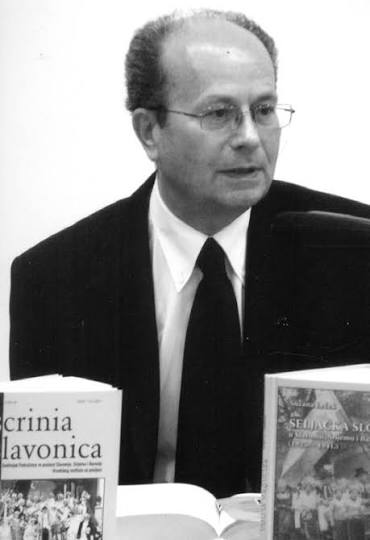
He studied many questions of 19th-century Croatian history: Croatian–Slovenian, Croatian–Serbian and Croatian–Hungarian relations, Yugoslavism and federalism, ideas and ideologies, Croatian national programmes, the revolution of 1848–1849, the phenomenon of the nation and of ethnicity, the emergence and formation of the modern Croatian nation, the beginnings of modern statistics in Croatia, and the history of education in Croatia and Slavonia. He was principal investigator on several research projects.
He argued that the modern nation is not the result of an “awakening of national consciousness” but a product of modernisation, and that modern nations arise and develop over the long modern era, from the late 18th to the late 20th century, not in the Middle Ages. He held that Croatian national-party politicians, already in the Illyrian movement and especially in 1848–1849, clearly committed themselves to a Croatian national programme and to reorganising the Habsburg Monarchy as a Central European confederation, rather than to a South Slav “national” state. He saw 1848–1849 as the moment the foundations of civil society were laid in Croatia, and the modern statistics of the Habsburg Monarchy as a key source against myths and stereotypes about nationality.
Major books
- Jugoslavenska ideologija u hrvatskoj i slovenskoj politici: hrvatsko-slovenski politički odnosi 1848.–1870. 1986
Yugoslav Ideology in Croatian and Slovenian Politics: Croatian–Slovenian Political Relations, 1848–1870 - Jugoslavizam i federalizam u hrvatskom nacionalnom preporodu 1835.–1875.: studija o političkoj teoriji i ideologiji 1989
Yugoslavism and Federalism in the Croatian National Revival, 1835–1875: A Study in Political Theory and Ideology - Rasprava o izgradnji moderne hrvatske nacije: nacija i nacionalni identitet 2006
The Structuring of the Modern Croatian Nation: Nation and National Identity - Naselja i stanovništvo hrvatskih pokrajina 1750.–1857. godine, vol. 1 and vol. 2 2018
Settlements and Population of the Croatian Provinces, 1750–1857 - Naselja i stanovništvo hrvatskih pokrajina 1828./1830. godine 2019
Settlements and Population of the Croatian Provinces, 1828/1830
Archival research
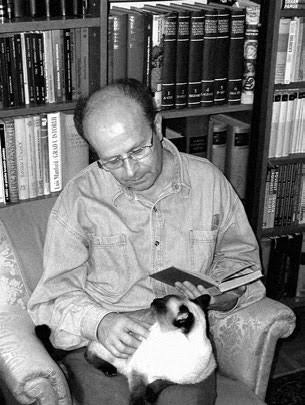
In retirement he continued years of extensive archival work. He researched the history of education in Croatia and the Habsburg Monarchy, the emergence and development of modern historical statistics, population censuses in the Croatian provinces, the social, economic and cultural position of peasants after 1848, the level and structure of their taxation, the size and productivity of their holdings, and the organisation of public health in the 19th century.
He located and photographed a vast body of historical sources, most of it unexplored: tens of thousands of photographs of archival documents from some twenty collections in several archives:
- on education in Croatia and Slavonia, 1848–1861: more than 80 boxes of material from several collections;
- the 1849 census of Croatia and Slavonia: ten extensive volumes of sources;
- the 1851 census of Croatia and Slavonia: more than 15,000 images of documents;
- the still unpublished censuses of the Military Frontier of 1869 and 1872;
- the so-called Kukuljević survey of 1850, an exceptional ethnographic and statistical survey whose transcription he organised;
- material on every area of life in Croatia and Slavonia, 1848–1861, bearing witness both to modernisation and to the very hard conditions of most of the population.
He systematically collected old books, compilations and encyclopaedias of the 18th and 19th centuries on education, the economy, population, ethnicity and nations: more than 10,000 volumes intended for the Croatian State Archives. This work produced several thousand manuscript pages on the settlements and population of the Croatian provinces from 1750 to 1857; he lived to see the last book of that work only in page proofs.
Publications
A selection of books and papers in PDF, mostly in Croatian. The full bibliography is available in CROSBI.
Books
- 2006
Rasprava o izgradnji moderne hrvatske nacije: Nacija i nacionalni identitet[The Structuring of the Modern Croatian Nation: Nation and National Identity]
Summary
A prolegomenon to a critical study of the nation. Instead of looking for the nation in “national consciousness” and feeling, it examines the real structures of the population — ethnic, cultural, linguistic, educational, social and religious — and treats the modern nation as a product of modernisation from the late 18th to the late 20th century.
- 2006
The Structuring of the Modern Croatian Nation: Nation and National Identity
Summary
The book’s English summary: the problems of studying the nation, ethnos and nation, and the two scholarly models, subjective and structural.
- 2018
Naselja i stanovništvo hrvatskih pokrajina 1750.–1857. godine, svezak 1[Settlements and Population of the Croatian Provinces, 1750–1857, vol. 1]
Summary
The first of two volumes on the settlements and population of the Croatian provinces, from the name-by-name census of 1746/51 under Maria Theresa to the first modern census of 1857, based on archival research. It covers the sources of 18th- and 19th-century historical demography, ethnographic statistics and the censuses from 1746/51 to 1841.
- 2018
Naselja i stanovništvo hrvatskih pokrajina 1750.–1857. godine, svezak 2[Settlements and Population of the Croatian Provinces, 1750–1857, vol. 2]
Summary
Continues the first volume: the settlements and population of Croatia, Slavonia, the Military Frontier, Istria and Dalmatia in 1846, 1851, 1854/55 and 1857, the demographic losses of 1848–1851, the social and economic structures of the population, and ethnic structures in the Habsburg Monarchy.
- 2019
Naselja i stanovništvo hrvatskih pokrajina 1828./1830. godine[Settlements and Population of the Croatian Provinces, 1828/1830]
Summary
The first complete numerical census of every settlement in the Croatian provinces before the modern census of 1857, by religious affiliation. The 1828/30 census had remained almost unknown to scholarship; its far larger name-by-name part is held in the Hungarian National Archives in Budapest.
Papers, articles and discussions
- 1981
Jugoslavenska ideja u hrvatskoj politici 1866.–1868.[The Yugoslav Idea in Croatian Politics, 1866–1868]
Summary
The Yugoslav policy of the Croatian People’s Party and its relations with the Principality of Serbia in 1866–1868, centred on the secret joint programme agreed with the Serbian government in April 1867. After Serbia abandoned it, the party returned to the idea of uniting the South Slavs within the Monarchy. The programme and 20 related documents from the papers of M. Mrazović are published as an appendix.
- 1996
Povjesničar koji ruši osnovna načela povijesne znanosti: u povodu knjige M. Brandta Život sa suvremenicima[A Historian Who Overturns the Basic Principles of Historical Science: On M. Brandt’s Book Život sa suvremenicima]
Summary
A critique of M. Brandt’s book Život sa suvremenicima: političke uspomene i svjetonazor (1996). The author argues that it is a political memoir rather than historiography, that its accusations deepen the crisis of the historical profession, and that scholarship must remain independent of politics.
- 1997
Hrvatska državna ideja E. Kvaternika 1861. godine: program o organizaciji hrvatske države[The Croatian State Idea of E. Kvaternik in 1861: A Programme for the Organisation of the Croatian State]
Summary
Part of the author’s research on the Croatian constitutional tradition: a detailed analysis of the national and political programme that E. Kvaternik put before the Croatian Diet in 1861, his draft law on the constitutional relationship of the Triune Kingdom to Austria and Hungary.
- 1998
Hrvatski nacionalni program i društvene promjene za revolucije 1848.–1849. godine[The Croatian National Programme and Social Change during the Revolution of 1848–1849]
Summary
The foundations of the Croatian national programme formed during the revolution of 1848–1849, adopted by all national political institutions and, for the first time on behalf of the whole people, by the Croatian Diet, and the social changes that made it possible. A fragment of a longer study.
- 1998
Povijesna struka i kritika hrvatske historiografije danas[The Historical Profession and the Critique of Croatian Historiography Today]
Summary
Prompted by recent critiques of Croatian historiography by S. Antoljak, N. Šetić, A. Buczynski and Z. Canjuga, the author discusses problems in the development of historical scholarship and the trends in the profession that deepen its crisis.
- 1999
Osnovice građanskog društva u Hrvatskoj za revolucije 1848.–1849. godine[Foundations of Civil Society in Croatia during the Revolution of 1848–1849]
Summary
The foundations of civil society in Croatian public life in 1848–1849: civil liberties, liberal and democratic principles, the public sphere and public opinion, free elections, a multi-party system and parliamentarism. On these the leaders of the national revival built the national programme and a modern liberal movement; the author rejects the view that Croatian nationalism emerged then as a new value.
- 1999
Odsjek za povijest i Hrvatski studiji: kriza povijesne struke se nastavlja[The Department of History and Croatian Studies: The Crisis of the Historical Profession Continues]
Summary
A reply to the claim by A. Buczynski, editor of Povijesni prilozi, that the Department of History of the Faculty of Humanities was leading a “campaign” against Croatian Studies. It continues the discussion begun in “The Historical Profession and the Critique of Croatian Historiography Today” on the development of historical scholarship, the Department’s relationship with Croatian Studies and the crisis of the profession.
- 2000
Fenomen nacije: porijeklo, integracija i razvoj[The Phenomenon of the Nation: Origin, Integration and Development]
Summary
The origin of the nation, its integration and stages of development. Nations arise during the long modern era of civil society, through processes of modernisation driven by the Enlightenment, the Industrial Revolution and the “bourgeois” revolutions; the paper ends with the origin and integration of the Croatian nation.
- 2000
Nacionalni identitet u djelu T. Smičiklasa — o podrijetlu Hrvata i hrvatskog naroda[National Identity in the Work of T. Smičiklas: On the Origin of the Croats and the Croatian People]
Summary
Croatian national identity in the work of Tadija Smičiklas and his influence on his contemporaries, together with identity in general, ethnic and national identity in 19th-century Croatia, the origin and integration of the Croatian nation, and nationalism and ideology. An expanded version of a paper given at the 1993 conference of the Croatian Academy of Sciences and Arts marking 150 years since Smičiklas’s birth.
- 2003
Nacija i nacionalni identitet[Nation and National Identity]
Summary
Nation-building and ethnic and national identity as a scholarly problem. Part of wider research on cultural and ethnic diversity in Croatia in the 19th and 20th centuries, which the author argues must be interdisciplinary.
- 2004
Nacija u srednjem vijeku[The Nation in the Middle Ages]
Summary
A rebuttal of the claim, made in Croatian historiography, that nations and “national feelings” existed before the modern era. The author sets out scholarly models of how ethnic communities and identities form and change, and warns that research on the Croatian nation is still shaped by 19th-century myths and stereotypes.
- 2009
Jugoslavenska/južnoslavenska ideja: sudbina jedne enciklopedijske studije iz 1988. godine[The Yugoslav/South Slav Idea: The Fate of an Encyclopaedia Study from 1988]
Summary
An encyclopaedia study written in 1988 for the second edition of the Encyclopaedia of Yugoslavia and withdrawn at the time, with the author’s account of why. He argues that Croatian national-party politicians chose to reorganise the Habsburg Monarchy as a Central European confederation while Serbia pursued a South Slav–Balkan programme, so the two could not be reconciled in the 19th century.
- 2010
Početak moderne statistike u Hrvatskoj i Slavoniji od 1850. do 1857. godine[The Beginnings of Modern Statistics in Croatia and Slavonia, 1850–1857]
Summary
The legal, organisational and institutional foundations of modern statistics in Croatia and Slavonia date not from 1857 but from 1850/51, and without them the first modern census of 1857 could not have been carried out. Draws on the material of the 1849 “census of the people” and the 1851 census of population and livestock.
- 2010
Početak etnografske statistike u Habsburškoj monarhiji i Hrvatskoj: etnička identifikacija i etničke strukture stanovništva[The Beginnings of Ethnographic Statistics in the Habsburg Monarchy and Croatia: Ethnic Identification and Ethnic Structures of the Population]
Summary
Ethnic identification and the ethnic structure of the population in the 19th-century Habsburg Monarchy and the Croatian provinces, studied through statistical sources on mass identification rather than only the self-identification of the elite. The findings challenge stereotypes about “national consciousness” and “nationality”, as well as the demonisation of the Habsburg Monarchy.
-
Etnički i nacionalni identiteti u Hrvatskoj u 19. i 20. stoljeću[Ethnic and National Identities in Croatia in the 19th and 20th Centuries]
Summary
The difference between ethnic and national identity, the levels at which they should be studied (ethnic and sub-ethnic groups, social relations, human interactions), and the emergence of modern ethnic and national identities in Croatia through modernisation from the late 18th century.